What does ‘Made in China’ say about quality and sustainability?
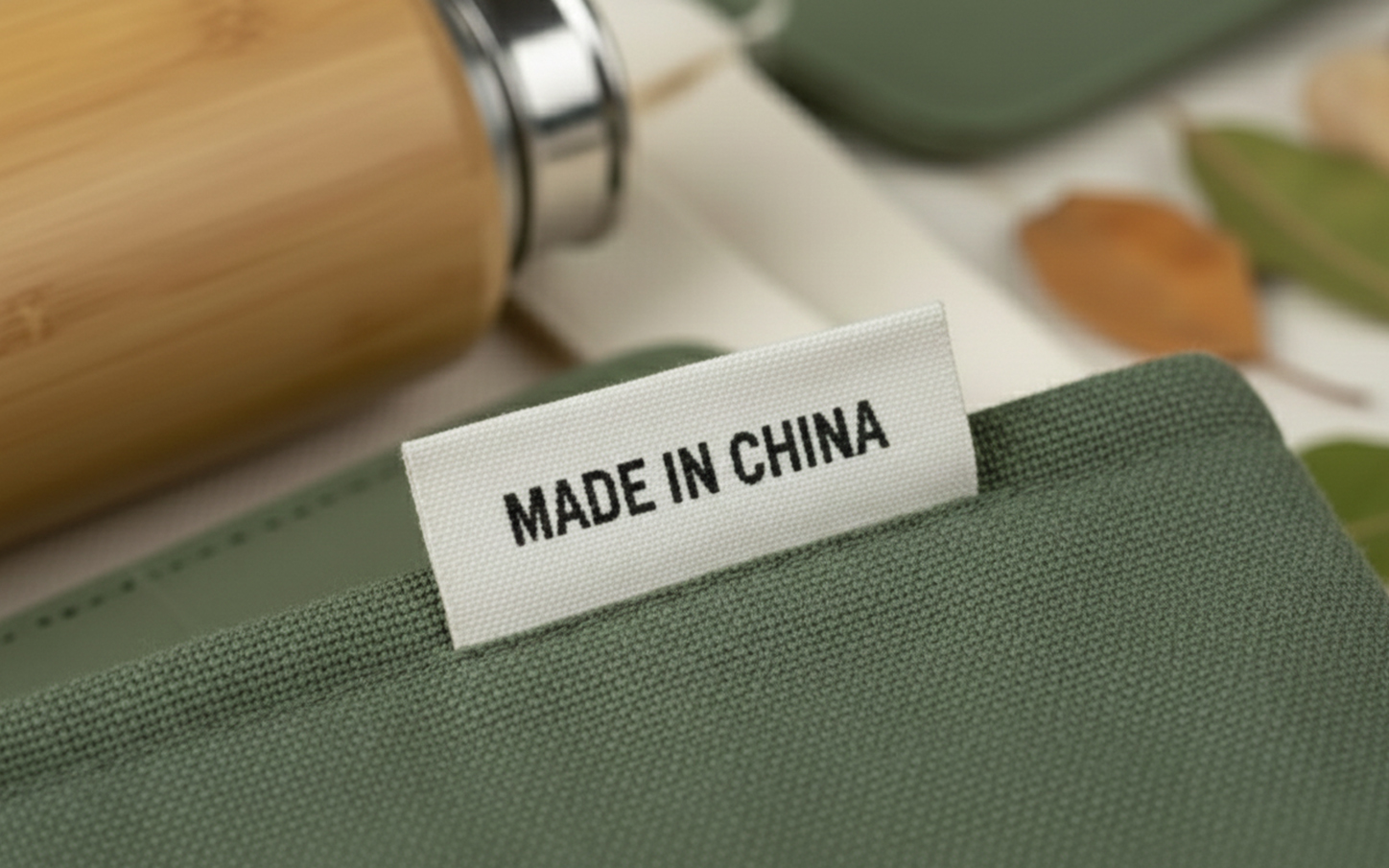
We are often asked: does a product made in China really fit within sustainable corporate gifts? We understand that hesistation. At the same time, the answer is more nuanced than the label suggests. Sustainability starts with the choices made before production.
Why origin doesn’t tell the whole story
The country of origin is often directly linked to quality and sustainability. In practice, however, these qualities are not determined by geography alone, but by the production process itself. Material selection, design, lifespan and the level of quality control during manufacturing all play a major role.
A cheap, poorly made product can just as easily come from Europe. And a high-quality, durable product can be produced perfectly well in China. The difference is not where something is made, but the standards that are set – and whether those standards are actually enforced.
China’s role in corporate gifts
China has long been a key part of global supply chains, including the promotional products market. Not only for finished goods, but especially for raw materials, semi-finished products and components. Materials, machinery and expertise come together there, which is why many sustainable alternatives originate in China. This does not mean that everything made in China is automatically sustainable. But the label ‘Made in China’ on its own says very little about how responsible a product actually is. The real difference lies in the choices made throughout the entire process: materials, product lifespan, certifications and logistics. Completely excluding China may sound logical, but in practice it often leads to less choice, higher costs or longer lead times.
Sustainability is possible in China
Many international A-brands manufacture (partly) in China, often working with long-term partners. With clear agreements, controlled processes and fixed quality standards, supported by audits and inspections. When managed properly, China can be a reliable production partner.
Sustainability does not stop at Europe’s borders. Recycled materials, certified factories and controlled supply chains are also available in China – but not by default. That’s why we work with suppliers who actively focus on quality and sustainability. Factories are selected based on certifications, working conditions and material use. This ensures sustainability is more than just a promise.
At Greengiving, we look beyond labels
At Greengiving, we look beyond the country of origin and assess the complete picture. A product that lasts for years and is used daily can ultimately be more sustainable than a locally produced alternative that needs frequent replacement. That’s why we don’t believe in simple labels, but in conscious choices. What matters is not where a product is made, but how and under what conditions.
When products disappoint, the cause is rarely the country of origin. ‘Made in China’ then becomes the easy explanation, while the real issue lies elsewhere. In practice, complaints usually arise because price was prioritised too heavily, agreements were not clearly defined, or quality control was lacking.
Transparency through our Green Score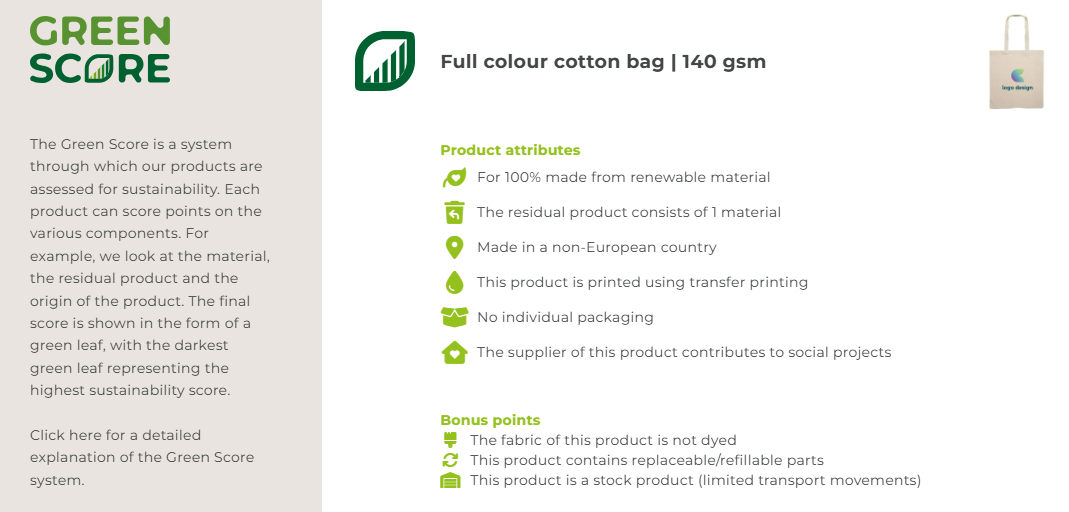
We don’t hide where our products come from. Transparency works better. We clearly state where a product is made and communicate openly about it. If ‘Made in China’ doesn’t feel right for you, there are often alternatives closer to home. That choice is deliberately yours. We always include the country of origin in our Green Score, so you can consciously choose what fits your organisation, policies or personal preference.
Follow us on social media
Be the first to hear about our news
Popular blogs



.svg)